
Color is Communication
🧪 Entry #29: This is the fastest way to tell your story.
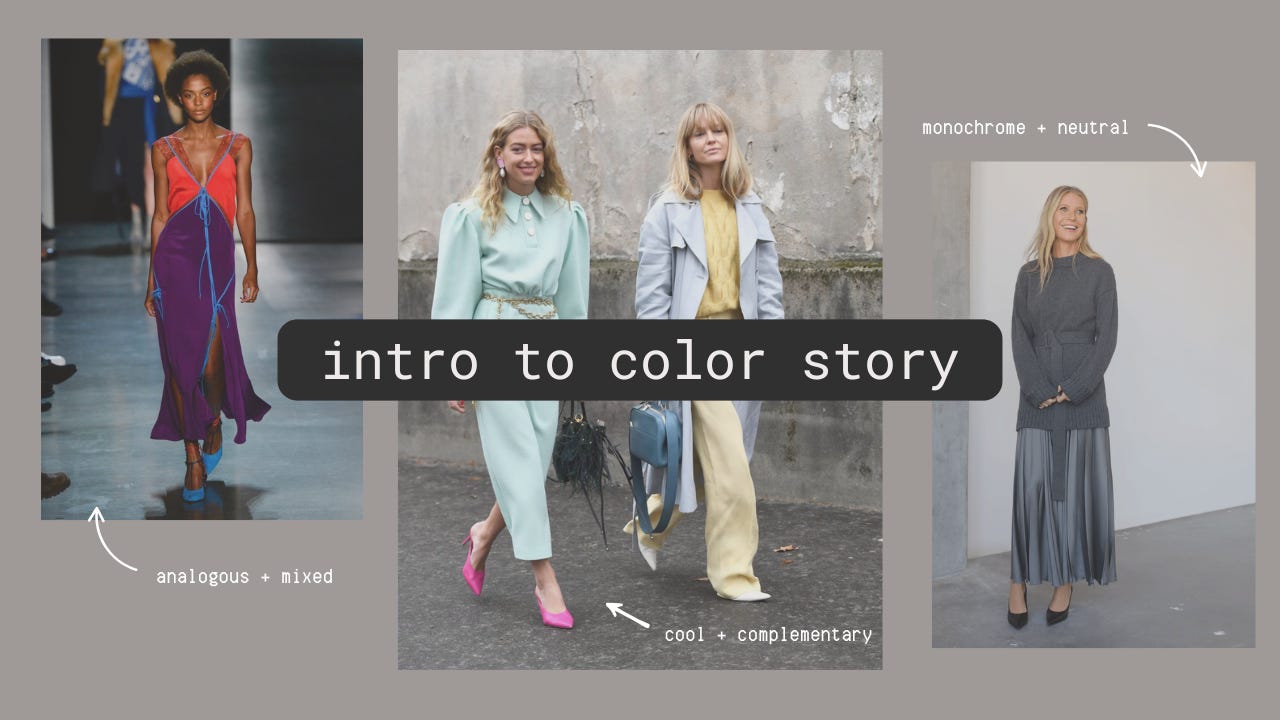
Before anyone notices fit, fabric, or proportions, they register color.
Color tells people:
how bold or reserved you are
how polished or relaxed you feel
how creative, serious, soft, sharp, playful, or grounded you appear
whether you’re cohesive or scattered
It also affects you.
Certain colors can make you feel energized. Others calm you down. Some make you feel invisible. Some make you feel powerful.
Color’s effect is both psychological and physiological.
So when your Color Story is unclear, you don’t just look less put-together. You feel disconnected, too.
color story
full outfits
Color Story vs. Color Type
Your Color Type is not your Color Story.
Color Story is how you use color within an outfit.
Your Color Type is just the data set that makes that easier.
Color Type doesn’t tell you what to wear. It tells you which colors are most likely to work together and on you.
From there, you still have full creative freedom.
Color Type Is a Cheat Code (Not a Cage)
When people resist Color Type, it’s usually because they think it means restriction.
But Color Type isn’t a sartorial cage.
Color Type is valuable because it:
reduces trial and error
explains why certain colors always feel better than others
makes mixing colors less chaotic
helps you build cohesive outfits and capsules more easily
In other words, it saves you time, money, and second-guessing.
But, you can still break the “rules.” You’ll just understand when and why you’re doing it.
Knowing your color type makes the difference between intentional contrast and accidental chaos.
Color Story
Color Story is the deliberate use of color within an outfit to create a specific mood, theme, or visual narrative.
It’s not just which colors you wear, it’s how they interact.
In fashion, Color Story determines whether an outfit feels:
calm or energized
soft or sharp
joyful or moody
mysterious or approachable
For the purposes of this module, we’re focusing on color story at the outfit level (not across your entire wardrobe).
This means we’re looking at:
the colors present in a single look
their relationships to one another
and the emotional tone they create together
Color Story sets the vibe of an outfit and communicates it well before anyone notices silhouette, fit, or detail.
The Three Elements of Color Story
Every Color Story is made up of three core elements:
1. The Color Combination
In this module, we’ll work with six color matching methods; repeatable frameworks that explain why certain combinations feel harmonious, dynamic, grounded, or bold.
These methods remove guesswork and give you a shared language for intentionally incorporating Color Story into your daily looks.
2. The Contrast Level
Contrast is what allows color to manipulate the appearance of your silhouette. It also contributes to the “energy level” of your look.
Low contrast creates calmness and cohesion. A low-contrast Color Story allows your silhouette’s true shape to be clearly understood.
High contrast creates energy and definition. A high-contrast Color Story breaks up the silhouette and can be used to create illusions or elements of focus.
3. Color Mood (& Interactions)
Each individual color carries psychological and emotional associations, and those meanings can shift depending on the full Color Story.
For example, the color black evokes a duality of moods: it signifies power, elegance, sophistication, and authority, but it can also suggest sadness or mystery.
Black with white feels classic, sharp, and authoritative
Black with brown feels grounded, subdued, and elegant
Black with neon feels powerful, confrontational, and energetic
What’s Next
Now that we’ve defined what color story is (and what it isn’t), here’s what we’ll dive into next:
The 6 Color Matching Methods
Clear, repeatable frameworks for combining colors with intention.
Color Psychology & Color Moods
How color choices shape the emotional tone of an outfit, and how that connects to your core style.
Building Your Color Stories
How to translate theory into real outfits you can actually wear, repeat, and evolve.
By the end of this module, color will stop feeling abstract or intimidating and start functioning as a creative tool you can use with confidence.
Until next time,
Alyssa
P.S. If color has always felt confusing, or you’re not confident in knowing which colors to incorporate in your wardrobe, learning your Color Type is genuinely useful. Not as a rulebook, but as a guiding light. If you’re interested in getting your own virtual color analysis, you can explore more here.
This series is so fun!